
Industry: Fabric Manufacturing · Company Size: ~250 Employees · Timeline: 6 Mon
MADASKY CONSULTING ENGAGEMENT — Madasky Consulting led the sales audit, designed the buyer-facing value framework, and equipped XYZ company commercial teams to deploy it — driving every result in this case study.
29% Increase in buyer close rate | 18% Shorter order-to-contract cycle | 2.1× Average order value increase | −43% Markdown & discount pressure |
Background: The Problem with Vague Value
XYZ Textiles is a textile manufacturer supplying fabric to mid-market retailers and specialty home stores across South Asia and Europe. With in-house dyeing and finishing, XYZ controls the full fabric production chain — a genuine competitive advantage that its sales team struggled to translate into price power at the negotiating table.
Buyer negotiations were grinding affairs. Retail and wholesale buyers routinely benchmarked XYZ against lower-cost competitors and pushed for markdowns, extended payment terms, or both. The sales team countered with quality claims, certifications, and sample swatches—all persuasive to product teams but unconvincing to procurement managers holding a spreadsheet.
“Buyers loved our fabrics. But love doesn’t close a line sheet at the right margin. Finance teams wanted numbers, not thread counts.” — Rahul S., Head of Sales, XYZ Company
MADASKY CONSULTING — Madasky Consulting was engaged to diagnose the root causes of buyer price pressure and design a data-backed commercial strategy to reframe XYZ Company value at the negotiating table |
The Sales Audit: What It Was
The audit was initiated by the General Manager of Sales following a surge in sampling costs and a spike in order amendments during the previous season. The goal was initially internal: identify where production and fulfilment workflows were leaking time and money.
MADASKY CONSULTING — Madasky Consulting designed the audit methodology and led a cross-functional team of four over six weeks, mapping and timing eight core operational workflows — fabric sampling, colorway approvals, purchase order processing, quality inspection sign-offs, and export documentation — specifically selecting workflows with direct buyer-facing cost implications.
Madasky Measured:
| End-to-end lead time per workflow stage | In working days, benchmarked against verified industry norms |
| Manual handoffs & approval touchpoints | Number of approval loops per order introducing delay or error risk |
| Rework & amendment rate per 100 orders | Frequency of changes and the average time cost added per amendment |
| Data re-entry delays | Average delay attributable to manual duplication across disconnected systems |
| Sample-to-bulk conversion cost | Full cost of sampling as a percentage of confirmed bulk order value |
The findings were stark. Colorway approvals averaged 6.8 working days due to email-based back-and-forth between the design studio, dyeing unit, and buyers. In 31% of cases, changes to orders required manual rework, which added an average of 4.2 days to lead times. Sample-to-bulk conversion costs ran at 18% of net order value — almost double the industry benchmark. Department heads approved these numbers and placed them in a Sales report that the sales team had never seen.
“We spent six weeks documenting exactly where time and cost were disappearing. No one in sales knew it existed.” — Nadia K., General Manager – Sales |
The Pivot: From Internal Benchmark to Buyer-Facing Evidence
The Head of Sales reviewed the Sales report ahead of a major buyer review season and had an immediate recognition: every inefficiency XYZ Company had just measured and was actively reducing was a direct pain point for their buyers too. Buyers absorb these delays downstream through late deliveries, markdown risks, and unplanned reorder costs.
MADASKY CONSULTING — Madasky Consulting identified this strategic pivot point: the audit was not simply an internal efficiency tool — it was a supplier performance story that buyers had never been told in numbers. Madasky led the translation of operational findings into a buyer-facing commercial framework over the following eight weeks.
Building the Buyer-Facing Value Framework
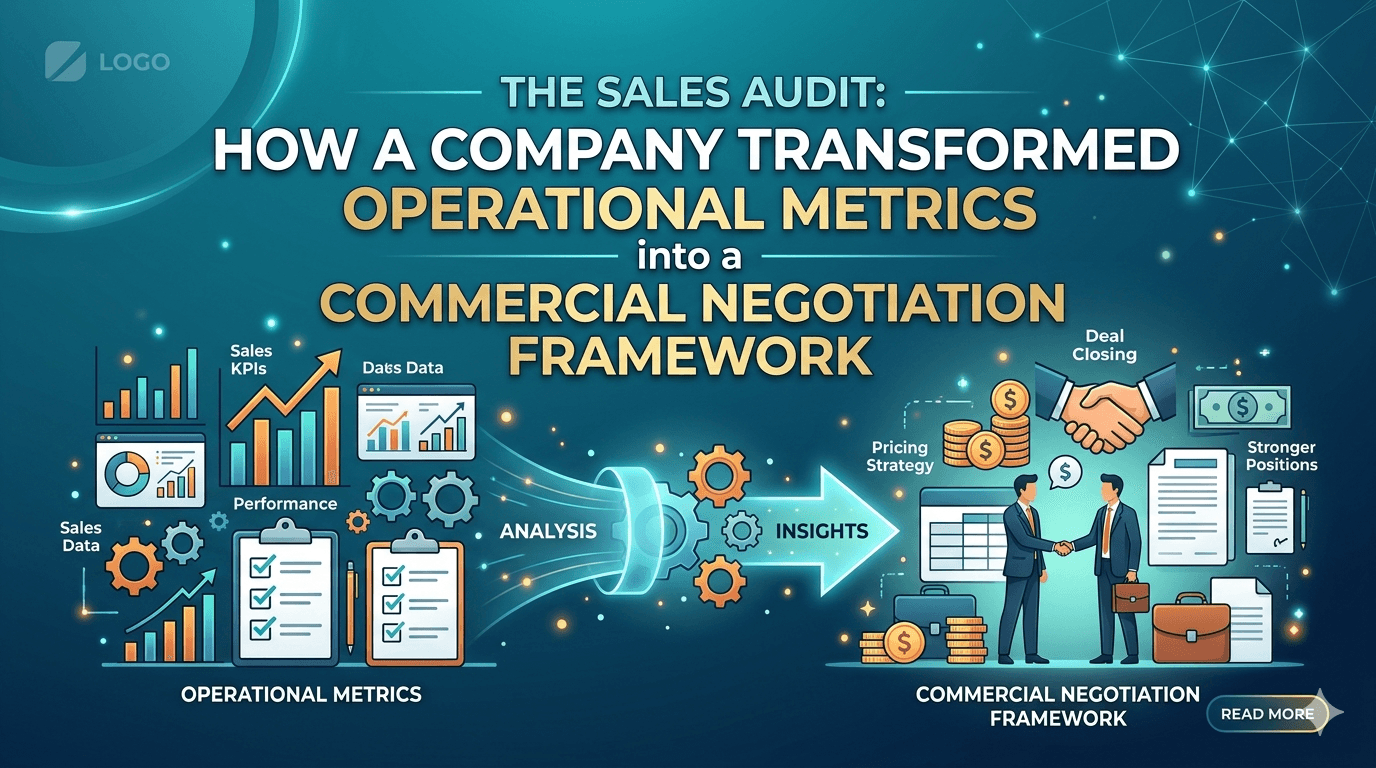
Over eight weeks, Madasky Consulting — working with the sales and merchandising team and the Sales analyst who ran the audit — built a structured value presentation for buyer meetings with three components:
| ① | Pre-Meeting Supplier Capability Questionnaire Madasky designed a buyer-facing tool asking procurement teams to share their current lead time expectations, amendment frequency, and past-season markdown rates—the exact categories the internal audit had measured—so conversations opened with the buyer’s own data. |
| ② | Cost-Impact Financial Model A one-tab model Madasky built mapping XYZ’s verified operational improvements to buyer-side financial outcomes: reduced markdown exposure, lower emergency reorder premiums, and compressed time-to-floor. Every figure traced to the signed-off audit. |
| ③ | One-Page Supplier Performance Summary A benchmark document comparing XYZ’s audit-verified lead times, amendment rates, and sampling costs against industry norms — with the buyer’s own inputs reflected back to them, shifting the conversation from price justification to risk quantification. |
Every figure in the model came from the verified internal audit — not marketing estimates. When the sales team told a retail buyer that their colorway approval cycle had been reduced to 3.1 days against an industry average of 6–9 days, they were citing a measured, documented finding. When they quantified the markdown risk reduction a faster fulfilment cycle delivered, the number was derived from the buyer’s own disclosed data.
Equipping the Sales and Merchandising Teams
Two training workshops prepared sales and merchandising staff to run the pre-meeting questionnaire, interpret the cost-impact model, and hold the conversation confidently when buyer numbers fell outside expected ranges.
MADASKY CONSULTING — Madasky Consulting designed and delivered both workshops. Teams were coached to treat high-variance buyers — those with unusually poor supplier lead times or high amendment rates — as high-urgency opportunities, not problem accounts. This reframe changed how the sales team prioritised their entire pipeline.
| Workshop | Focus | Madasky Coaching Objective |
| Workshop 1 | Questionnaire Delivery | How to introduce the pre-meeting tool, sequence questions, and handle buyer reluctance to disclose internal performance data |
| Workshop 2 | Model Interpretation & Objection Handling | Reading buyer inputs against XYZ benchmarks, building a live ROI summary in-meeting, and responding to objections with audit-verified data |
Results: What Changed in Buyer Negotiations
The shift in buyer conversations was immediate. Retail procurement managers who arrived at line review meetings expecting a product pitch found themselves reviewing a cost-impact summary built from their own disclosed data. Discussions moved from ‘why should we pay your price?’ to ‘how quickly can we get this programme on the floor?’
The most durable change was in markdown and discount negotiations. Buyers who could see a quantified reduction in markdown exposure — tied to XYZ’s verified lead time performance — reduced their discount demands substantially. In several cases, the ROI summary became the document buyers used to justify the vendor decision internally to their own finance committees.
| Metric | Before | After (6 Months) | Change |
| Avg. order-to-contract cycle | 74 days | 61 days | −18% |
| Close rate on qualified pipeline | 31% | 40% | +29% |
| Average confirmed order value | $62,000 | $130,200 | +2.1× |
| Markdown / discount concessions | 62% of accounts | 35% of accounts | −43% |
| Procurement objection rounds | 3.8 rounds avg. | 1.4 rounds avg. | −63% |
| Buyers requesting ROI summary | N/A | 78% of line reviews | New Standard |
“Showing a buyer their own markdown risk number — and then showing how our lead time cuts it — is a completely different conversation from showing them a swatch.” — Poonam M., Senior Account Manager |
Key Lessons for Home Textile & Apparel Leaders
| 1 | Sales Efficiency Data Is Untapped Commercial Capital Most textile and apparel manufacturers commission Sales audits and file them away. Madasky Consulting specialises in identifying this data and converting it into buyer-facing commercial evidence — the same lead time, amendment rate, and sampling cost figures that drive internal improvement are exactly what shifts buyer negotiations. |
| 2 | Buyers’ Real Risk Is Downstream Cost, Not Upfront Price Procurement teams are risk-sensitive, not just price-sensitive. Markdown exposure, late delivery penalties, and emergency reorder premiums are real, quantifiable costs. Madasky’s frameworks help suppliers demonstrate, in numbers, that they reduce those risks — making the value proposition fundamentally different from a lower unit price. |
| 3 | Specificity Disarms the Discount Conversation Vague quality claims invite skepticism and discount pressure. Audit-verified specifics — ‘our amendment rate is 9% against an industry average of 31%’ — reframe the value entirely. Madasky builds the specificity sales teams need but rarely have access to on their own. |
| 4 | The Framework Matters as Much as the Data XYZ’s audit data became commercially useful only after Madasky translated it into a buyer-facing format reflecting the buyer’s own inputs. The eight-week framework development was what unlocked the commercial return — without it, the data remained an internal report. |
How to Replicate This in Your Business
Madasky Consulting delivers this end-to-end engagement for manufacturers across textile, apparel, and home goods categories. The six-step process:
Conclusion
XYZ didn’t win better negotiations by cutting prices, adding certifications, or redesigning their line sheet. They won them by doing something most manufacturers never think to do: telling buyers, in the buyer’s own financial language, exactly what their operational performance was worth.
The data was already there. It had been measured, verified, and signed off. It just needed Madasky Consulting to recognise that an internal Sales report could become the most persuasive document in a buyer meeting — and to build the bridge between the two.
Ready to turn your Sales data into a commercial advantage?
Contact Madasky Consulting. · info@madasky.com · www.madasky.com